Dynasty
Origins and Ancient Dynastic Tradition
The Bagrationi family originated in the ancient historical and geographical province of Speri, now Ispir in Turkey. Situated in the far southwest of the Kingdom of Kartli, known to classical writers as Iberia, Speri was contested for centuries because of the languages and ethnic composition of its inhabitants. Nevertheless, the region was always Georgian.
Branches of the Bagrationi family later became established in the Georgian lands, Armenia, and Hereti. In each of these regions, members of the family rose to positions of authority.
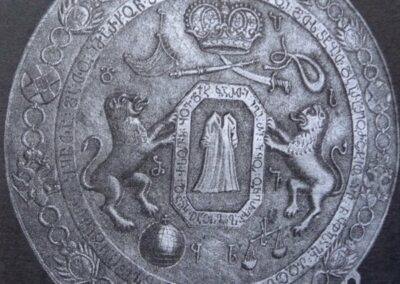
According to an ancient dynastic tradition preserved in medieval Georgian historiography, the Bagrationi descend from the biblical King David. This sacred ancestry formed an enduring part of the dynasty’s identity and of its conception of Christian kingship. The authority of the Bagrationi monarchs was exercised in close relationship with the Georgian Orthodox Church, and together Crown and Church shaped the political, spiritual, and cultural life of Georgia for centuries.
Through maternal descent and political inheritance, the Bagrationi also continued the royal tradition of Georgia’s earlier Pharnavazid and Chosroid rulers. Georgian chronicles connect Guaram, the first Bagrationi erismtavari of Kartli, with the Pharnavazid line through his mother. This connection gave the Bagrationi both genealogical and political continuity with the ancient monarchy of Kartli.
The Bagrationi are the world’s oldest surviving Christian royal dynasty and, after the Imperial House of Japan, the second-oldest surviving royal dynasty overall.
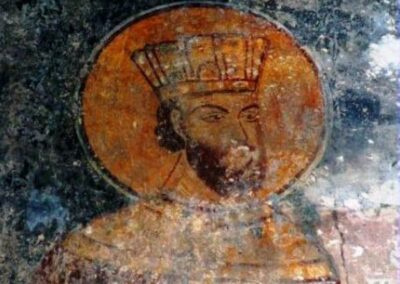
The Georgian Bagrationi emerged as a ruling house in the sixth century, when Guaram became erismtavari, or presiding prince, of Kartli amid the rivalry between the Sasanian Persian and Byzantine Empires. In 888, Adarnase II assumed the title of King of the Georgians. Under Bagrat III, crowned King of Abkhazia in 978 and King of the Georgians in 1008, the crowns of western and eastern Georgia were united.
The Georgian Monarchy
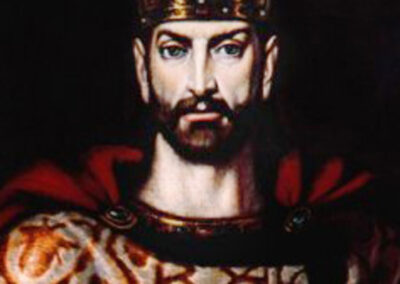
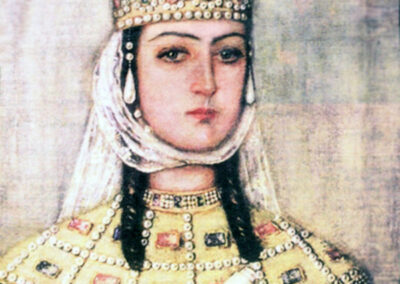
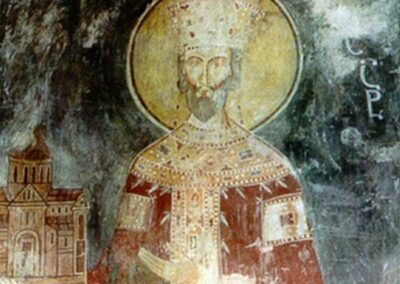
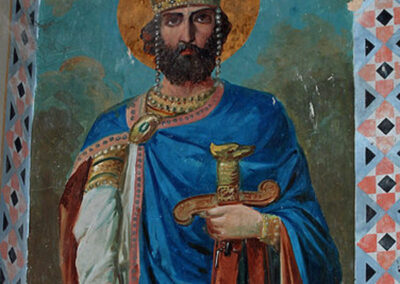
Under Bagrat III and his descendants, the Bagrationi presided over the political and cultural consolidation of the Georgian kingdom. Among the dynasty’s greatest sovereigns were Saint King Davit IV the Builder, who reigned from 1089 to 1125, and Saint Queen Tamar, who reigned from 1184 to 1213. Their reigns marked the height of medieval Georgia’s power, prosperity, learning, and international influence.
When the united Kingdom of Georgia fragmented during the fifteenth century, different branches of the Royal House continued to occupy the thrones of Kartli, Kakheti, and Imereti. The monarchy therefore survived in the successor kingdoms until their annexation by the Russian Empire in the nineteenth century.
The Mukhrani Branch
The first king of the separate Kingdom of Kartli was Constantine II, a grandson of King Alexander I of united Georgia. The Mukhrani branch of the Royal House was founded in 1512 by Bagrat I, a younger son of Constantine II and brother of King Davit X. Bagrat received Mukhrani as an appanage, or hereditary domain, and served as commander of Upper Kartli.
The Mukhrani branch later occupied the throne of Kartli. In 1658, Vakhtang V of Mukhrani became king and established a line of sovereigns that played a central role in the political life of eastern Georgia. The present Head of the Royal House descends from this branch.
Church, Law, and Learning
The history of the Georgian monarchy cannot be understood apart from its relationship with the Georgian Orthodox Church. Bagrationi sovereigns defended the Church, founded and restored monasteries, encouraged learning, and supported the spiritual unity of the country. The Church has canonized several members of the dynasty, including Saint King Davit IV the Builder, Saint Queen Tamar, Saint King Demetre II the Self-Sacrificer, and Saint King Luarsab II.
Members of the dynasty also entered religious life, and several served as Catholicos-Patriarchs of Georgia. Among the most distinguished was Anton I, an ecclesiastical leader, philosopher, historian, educator, and translator whose work contributed greatly to Georgian intellectual life.
The kings of Georgia were commanders-in-chief of their armies, but the service of the Bagrationi was not confined to the battlefield. Members of the dynasty distinguished themselves in diplomacy, government, law, literature, philosophy, historiography, geography, and the natural sciences.
Saint King Davit IV founded Gelati Monastery and its celebrated academy, which became one of the foremost ecclesiastical, educational, scientific, and cultural centres of medieval Georgia. Royal patronage also supported manuscript production, translation, education, and the building of churches and monasteries throughout the kingdom.
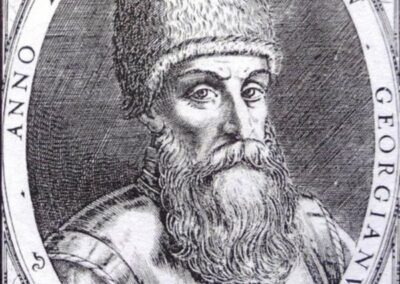
Vakhtang VI holds a special place in the history of Georgian law and scholarship. He sponsored the first Georgian printing press in Tbilisi, assembled an important corpus of laws, promoted the study of astronomy, geography, medicine, and history, and commissioned a new edition of the Georgian chronicles. Anton I and Princes Vakhushti, Ioane, Davit, and Teimuraz Bagrationi likewise made lasting contributions to Georgian learning and culture.
Annexation, Repression, and Exile
The Russian Empire annexed the Kingdom of Kartli and Kakheti in 1801 and the Kingdom of Imereti in 1810. The reigning branches of the Bagrationi were deprived of their thrones, and many members of the Royal Family were removed from Georgia, placed under surveillance, or compelled to live elsewhere in the Empire. In exile, members of the dynasty continued to serve in military and public life and found new fields of activity in scholarship, literature, and the arts.
For many Georgians, the Crown remained a symbol of national continuity, stability, and hope for the future. Georgia restored its independence in 1918, but the Democratic Republic was overthrown by the Red Army invasion of February 1921, and Georgia was incorporated into the Soviet state.
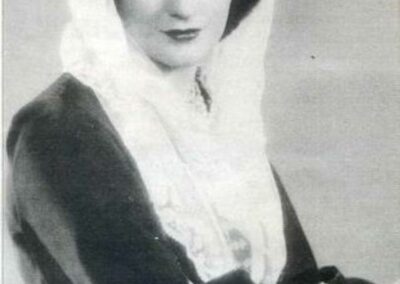
In 1930, Prince Giorgi Bagration of Mukhrani was arrested. Following the intervention of the Russian writer Maxim Gorky, he and his family received permission to leave the Soviet Union in 1931. His daughter, Princess Mariam Bagration of Mukhrani, later returned to Tbilisi, where she was arrested and exiled to Siberia for eight years. She died in 1992 and was buried at Svetitskhoveli Cathedral in Mtskheta.
The Royal House in Exile
In 1940, Prince Irakli Bagration of Mukhrani married the Italian noblewoman Countess Maria Antonietta Pasquini. Their son, Prince Giorgi Bagration of Mukhrani, was born in Rome in 1944.
Prince Irakli longed throughout his life to return to Georgia. His mother, Princess Elena Bagration of Mukhrani, asked her daughter, Princess Mariam, who was living in Georgia, to bring her soil from Svetitskhoveli Cathedral. Princess Elena kept the soil for her own burial, but it was instead placed at the burial of her son after Prince Irakli died in Madrid on 30 October 1977.
Despite the restrictions imposed by the Communist regime, a funeral service for Prince Irakli was permitted in Soviet Georgia. The late His Holiness and Beatitude Catholicos-Patriarch Ilia II later recalled the circumstances of that service.
On 19 August 1995, the Feast of the Transfiguration, Prince Giorgi arranged the transfer to Georgia of the remains of his father, Prince Irakli, and his grandparents, Prince Giorgi and Princess Elena. Their remains were interred at Svetitskhoveli Cathedral in Mtskheta, in the soil of their homeland.
European Dynastic Connections
The Mukhrani branch established close dynastic connections with several European royal and imperial houses. Prince Irakli’s sister, Princess Leonida Bagration of Mukhrani, married Grand Duke Vladimir Kirillovich of Russia. Their daughter, Grand Duchess Maria Vladimirovna, is a first cousin of the late Prince Giorgi and a first cousin once removed of Prince Davit. Prince Irakli later married Princess Maria de las Mercedes of Bavaria and Bourbon, Infanta of Spain, a member of the House of Wittelsbach. Their marriage connected the Bagrationi with the Royal Houses of Bavaria and Spain.
Return to Georgia
Following the restoration of Georgian independence in 1991, Prince Giorgi renewed the Royal House’s public relationship with its homeland. The Royal House records that he was recognized by the Georgian government and Parliament as Head of the former Royal Family. His reception by state and Church leaders during his return to Georgia in 1995 further affirmed his public position as Head of the Royal House.
Known in Spain as Jorge de Bagration, Prince Giorgi was also a distinguished motor-racing and rally driver. He won the Spanish Rally Championship in 1979 and 1981. He settled permanently in Georgia in 2005 and died in Tbilisi on 16 January 2008. He was buried at Svetitskhoveli Cathedral.
The Present Head of the Royal House
The present Head of the Royal House and heir to the Crown of Georgia is His Royal Highness Prince Davit Bagrationi Mukhran Batonishvili. Following the death of his father, Prince Giorgi, he succeeded in accordance with the dynastic tradition of the Royal House.
The Royal House recognizes Prince Davit as the lawful heir to the historic Crown of Georgia and as Sovereign Head of the Royal House and its dynastic Orders. In him, the ancient heritage of the Bagrationi continues as a living institution devoted to Georgia, its history, its Church, and its people.
Dynastic Gallery